
4 min read · 10 March 2026
Confused by the different types of skis.
Are you lost when it comes to choosing the correct skis for you?
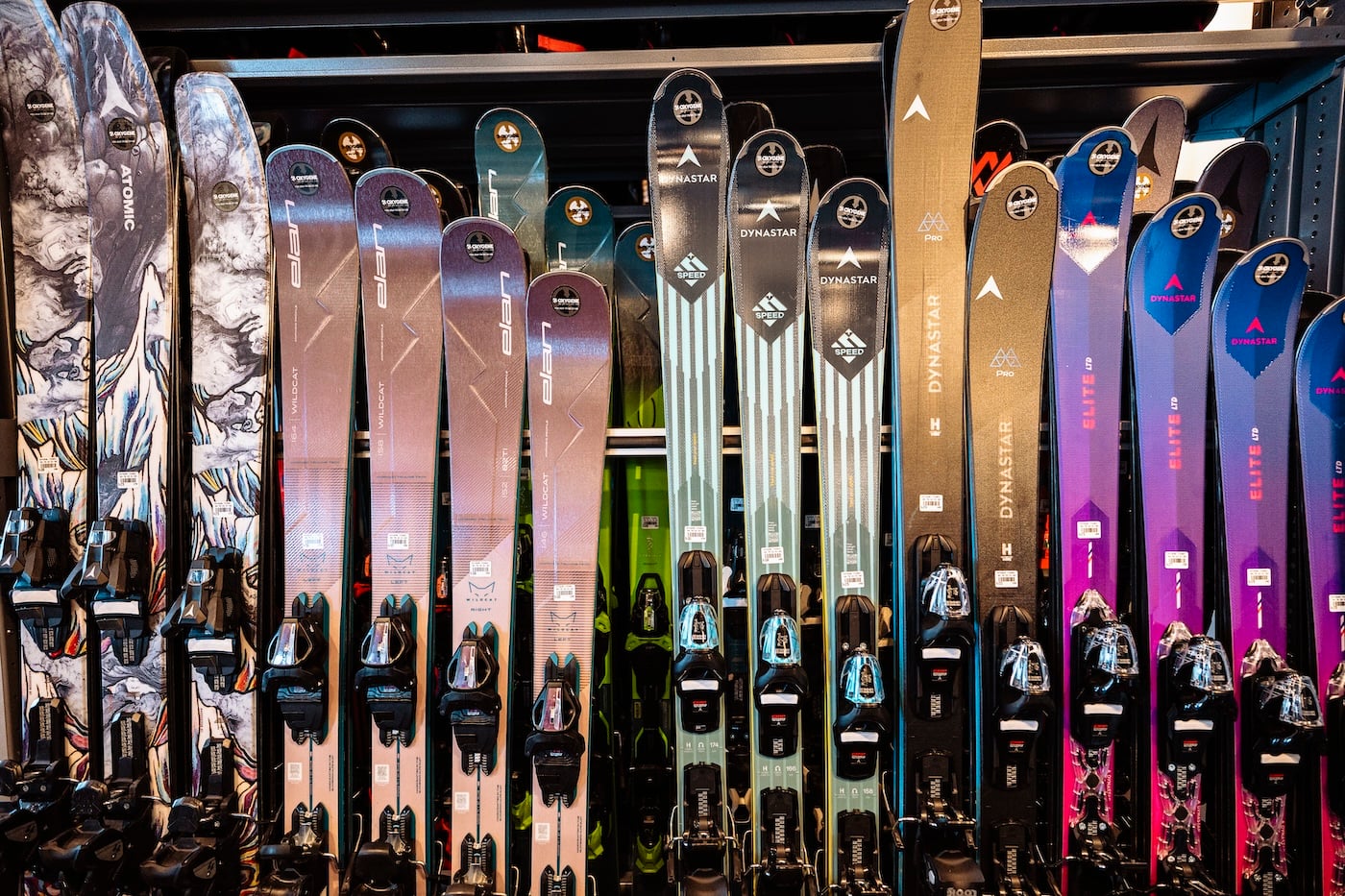
Not sure which skis to choose? Oxyski can help!
With so many different types of skis available, choosing the right pair can feel a little confusing. Beginner, all-mountain, freestyle, freeride, racing… what does it all mean?
Here’s a simple guide to the main types of skis and what they’re designed for, so you can find the right pair for your level and the way you like to ski.
Beginner skis
Best for: children and adults learning to ski
If you’re just starting out, look for skis that are lightweight, flexible and easy to turn. Shorter skis are generally easier to control, although the right length will depend on your height, weight and ability.
The aim is simple: you want a ski that helps you turn and control your speed without requiring too much effort.
Your bindings also need to be correctly adjusted for your height, weight, age, boot size and skiing ability. This allows them to release when necessary in the event of a fall.
If you’re hiring your equipment from Oxyski, our team will help you choose the right skis and make sure everything is properly adjusted before you head onto the slopes.
All-mountain skis
Also known as: all-round or all-terrain skis
As the name suggests, all-mountain skis are designed to handle a bit of everything.
They’re versatile enough for skiing on groomed pistes while also allowing you to explore different snow conditions and terrain. Their shape – typically narrower underfoot and wider towards the tip and tail – helps make turning easier while providing good stability.
They’re a great option for a wide range of skiers, particularly if you want one pair of skis that can take you around the whole mountain.
However, more advanced skiers who want to focus specifically on freeride, freestyle or racing may prefer a ski designed specifically for that discipline.
Freestyle skis
Also known as: twin-tip skis
If jumps, tricks and the snowpark are your thing, freestyle skis are designed with you in mind.
Most feature a twin-tip design, meaning both the front and back of the ski curve upwards. This makes it easier to take off and land in different directions, as well as ski switch – in other words, backwards.
Freestyle skis also tend to be relatively lightweight and manoeuvrable, making them easier to move around in the air.
They can be great fun around the mountain too, but if you have no intention of hitting the park, doing tricks or learning to ski switch, another type of ski will probably be better suited to you.
Freeride & powder skis
Also known as: off-piste or powder skis
Planning to venture beyond the groomed pistes? Freeride skis are designed to perform in softer, deeper and variable snow.
They’re generally wider than standard piste skis, giving you a larger surface area to help the skis float through powder. Many also feature rocker, where the tip – and sometimes the tail – rises earlier from the snow, helping with flotation and making the skis easier to manoeuvre in deeper snow.
The trade-off is that very wide freeride skis can feel less precise on hard-packed pistes than skis specifically designed for groomed snow.
If you’re heading off-piste, remember that having the right skis is only part of the equation. You also need the appropriate avalanche safety equipment, knowledge and experience – or the guidance of a qualified professional.
Racing skis
Also known as: slalom, giant slalom (GS), Super-G or downhill skis
Racing skis are built for speed, precision and powerful turns on prepared pistes.
Their construction varies depending on the discipline. Slalom skis, for example, are relatively short and designed for quick, tight turns, while giant slalom and speed-event skis are longer and built for stability at higher speeds.
In general, race skis are stiffer and more demanding than recreational skis. This gives experienced skiers greater precision and edge grip on hard-packed snow, but also means they require good technique and more effort to control.
Race-oriented ski boots are also typically stiffer, providing greater support and allowing more precise input from the skier.
Still not sure which skis are right for you?
Don’t worry – you don’t need to become a ski equipment expert before your holiday.
Tell the Oxyski team your level, where you like to ski and what you want to get out of your time on the mountain, and we’ll help you find equipment that suits you.
So, which skis would you choose?
Fancy skiing with our instructors?
Lessons are booked online, resort by resort.